Thanksgiving Facts for Kids: The True Story, Wild Trivia and Harvest Festivals
Thanksgiving is full of surprises once you look past the turkey. Here are some of the facts and stories we put together for kids aged 4 to 10, perfect for reading out at the table while everyone waits for dinner.
Wild Thanksgiving trivia
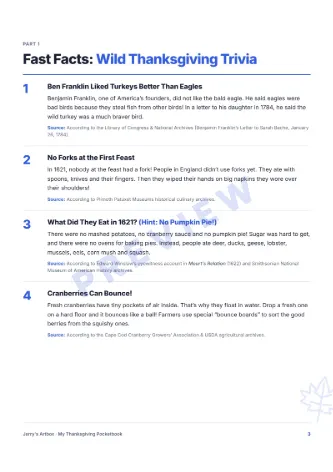
Benjamin Franklin did not like the bald eagle. In a 1784 letter to his daughter, he complained that eagles steal fish from other birds, and said the wild turkey was a much braver bird.
Nobody at the 1621 feast had a fork. People in England didn't use them yet, so everyone ate with spoons, knives and their fingers, then wiped their hands on big napkins worn over their shoulders. There was no pumpkin pie either: sugar was hard to get and there were no ovens for baking. The menu was deer, ducks, geese, lobster, mussels, eels, corn mush and squash.
Fresh cranberries have tiny pockets of air inside, which is why they float, and why a fresh one dropped on a hard floor bounces like a ball. Farmers use special bounce boards to sort the good berries from the squishy ones. And in 1926, someone sent President Calvin Coolidge a live raccoon to eat for Thanksgiving. His family kept her as a pet instead, named her Rebecca and walked her around the White House on a leash.
The true story, simply told
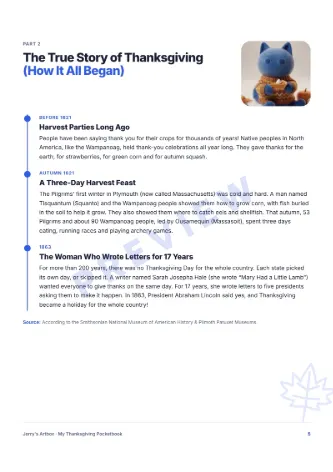
People were saying thank you for their harvests long before 1621. Native peoples such as the Wampanoag held thanksgiving celebrations all year, for the earth, for strawberries, for green corn and for autumn squash.
The Pilgrims' first winter in Plymouth was cold and hard. Tisquantum (Squanto) and the Wampanoag showed them how to grow corn with fish buried in the soil, and where to catch eels and shellfish. That autumn, 53 Pilgrims and about 90 Wampanoag people, led by Ousamequin (Massasoit), spent three days eating, running races and playing archery games. It only became a national holiday in 1863, after the writer Sarah Josepha Hale, who wrote "Mary Had a Little Lamb", spent 17 years sending letters to five presidents until Abraham Lincoln said yes.
Thank-you festivals around the world
Korea celebrates Chuseok for three days under the harvest moon, with families making songpyeon, little half-moon rice cakes steamed on pine needles. Germany and Austria have Erntedankfest, with harvest crowns made of golden wheat. Canada's Thanksgiving comes in October because crops up north are ready sooner, and Japan's Labor Thanksgiving Day on November 23 is a day for kids to draw thank-you pictures for firefighters, nurses and other helpers. In Ghana, the Homowo festival, which means "hooting at hunger", celebrates the end of a time when food was scarce.
Want the full printable?
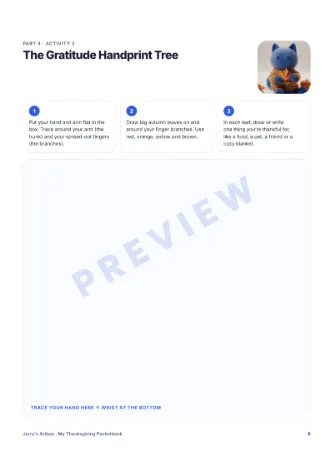
My Thanksgiving Pocketbook has all of these stories and their sources, plus five drawing activities for the day: disguise a turkey, a gratitude handprint tree, 1621 vs. today feast plates, table name cards and a squiggle game.