Taking Kids to an Art Museum: How Long to Stay, What to Ask and Games to Play
Museum visits with children go best when they're short, playful and focused. A two-hour march past every wall usually ends in tears. Here's what research says about how we look at art, and how to use it to plan a visit kids enjoy.
What the research says
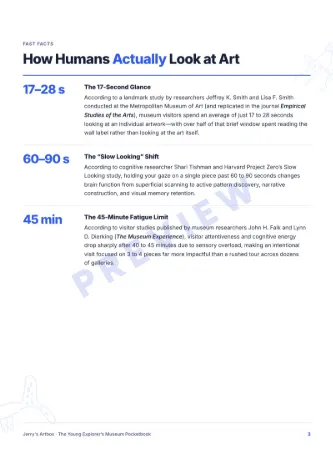
A well-known study by Jeffrey and Lisa Smith at the Metropolitan Museum of Art found that visitors spend just 17 to 28 seconds looking at an artwork on average, and more than half of that reading the label.
Researcher Shari Tishman at Harvard's Project Zero has shown that looking at one piece for longer, past 60 to 90 seconds, shifts the brain from quick scanning to really noticing patterns, building stories and remembering. And museum researchers John Falk and Lynn Dierking found that attention drops sharply after about 40 to 45 minutes.
The golden rule: 45 minutes, 3 to 4 artworks
Put those together and you get a simple plan: about 45 minutes and three or four artworks, looked at properly, rather than a rushed tour of dozens. Leave while everyone is still having fun, and the next visit will be easy to sell.
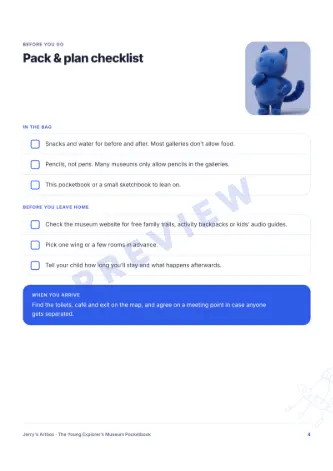
If you can, pick the three or four artworks before you go, using the museum's website, so the visit has a little treasure-hunt feeling from the start.
What to do in front of a painting
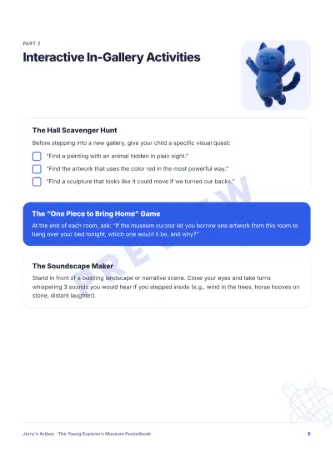
Start with 30 quiet seconds of just looking before anyone says a word. Then ask open questions: What do you notice first? What's happening here? How do you think the artist made this? Match the question to the age: little ones can hunt for colours and animals, while older kids can guess the story or the artist's mood.
Games help too. Try a scavenger hunt for details, let each child choose "one piece to bring home" (if you could take one painting home, which would it be and where would you hang it?), or imagine the sounds you'd hear inside a painting.
Explain the rules, don't just say no
Kids follow museum rules much better when they know why. Fingers carry invisible oils and acids, and over many years even gentle touches can slowly eat away at paint and stone. Two big steps back from an artwork means shoes, zips and elbows never bump into history by mistake.
Museum rooms are shaped like giant echo chambers, so quiet voices and strolling feet help everyone hear their own thoughts. And museums ask for pencils, not pens, because pencil marks can be cleaned off if there's an accident, while ink and juice soak in forever.
Want the full printable?
The Young Explorer's Museum Pocketbook has a pack-and-plan checklist, the museum rules explained for kids, questions for ages 2 to 11, three gallery games, four sketch pages and ideas for back at home.