How Kids Can Make Their Own Newspaper: The Five Ws, a Front Page and a Short History of News
Making a newspaper is a brilliant project for kids aged 5 to 11. It covers reading, writing, interviewing and drawing, and it gives them the fun of being in charge. Here's what young reporters should know before they start.
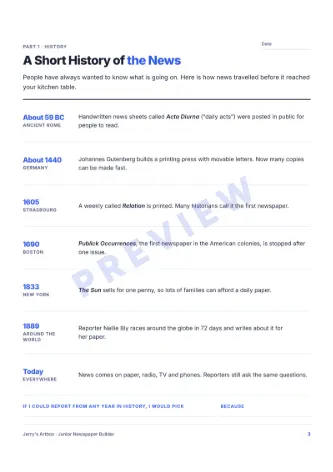
A short history of the news
People have always wanted to know what's going on. Around 59 BC in ancient Rome, handwritten news sheets called Acta Diurna ("daily acts") were posted in public for people to read. Around 1440 in Germany, Johannes Gutenberg built a printing press with movable letters, so many copies could be made quickly, and in 1605 a weekly called Relation was printed in Strasbourg. Many historians call it the first newspaper.
In 1690, Publick Occurrences became the first newspaper in the American colonies, and was stopped after one issue. In 1833, The Sun in New York sold for one penny, so lots of families could afford a daily paper. And in 1889, reporter Nellie Bly raced around the globe in 72 days and wrote about it for her paper. Today news comes on paper, radio, TV and phones, but reporters still ask the same questions.
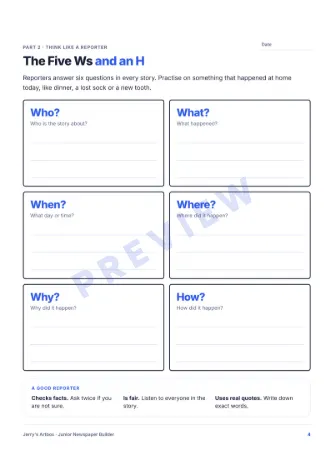
Think like a reporter: the Five Ws and an H
Reporters answer six questions in every story: Who is it about? What happened? When? Where? Why? And how? Kids can practise on something that happened at home today, like dinner, a lost sock or a wobbly tooth. A good reporter also checks facts (ask twice if you're not sure), listens to everyone in the story and uses real quotes, writing down the exact words.
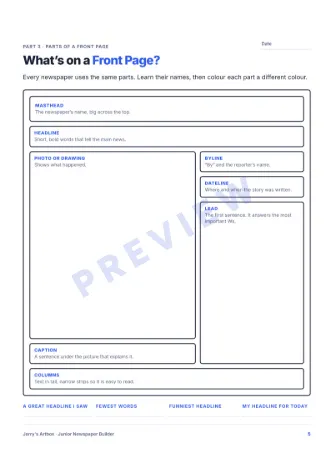
The parts of a front page
Every newspaper uses the same parts. The masthead is the paper's name, big across the top. The headline is a few short, bold words that tell the main news. The byline says "By" and the reporter's name, and the dateline says where and when the story was written. The lead is the first sentence and answers the most important Ws. A photo or drawing shows what happened, a caption explains it, and the text runs in tall, narrow columns so it's easy to read.
Then it's time to name the paper. Real papers have names like The Times or The Daily News, so try The ___ Gazette or The Daily ___, and decide how often it comes out and what it costs. Pennies, hugs or cookies all work.
Want the full printable?
Make Your Own Newspaper turns all of this into a 17-page workbook: a reporter's notebook, a family interview, a front page, three ready-made layouts, travel and birthday special editions and a fun page.