How to Decide Which Kids' Artwork to Keep: A Simple Three-Step Routine
Children make hundreds of drawings a year, often thousands of sheets of paper by the time they're ten. Keeping all of it isn't realistic, and throwing it away in secret doesn't feel right either. The answer is a simple routine: capture what matters about each piece, then keep only the best few as physical keepsakes.
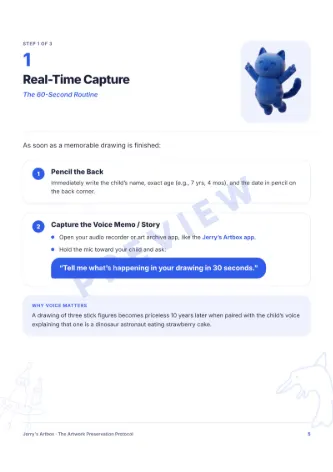
Step 1: capture it in 60 seconds
When a drawing comes home, take one minute while it's fresh. Pencil your child's name, age and the date on the back, and ask them to tell you about it. Record them telling the story, or write down a line of what they said. The story and their voice are often worth more than the paper.
If you only do one thing, do this one. A drawing with a date and a story attached is a memory; without them, it's just a picture you might not recognise in ten years.
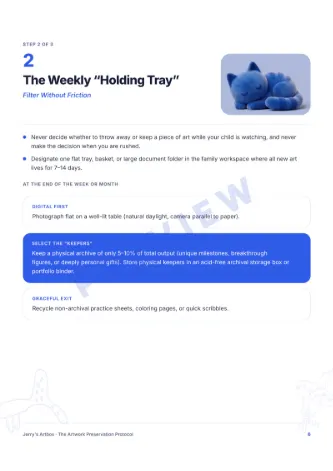
Step 2: a weekly holding tray
Give new art one home: a tray, a basket or a drawer. Once a week, sort it. Photograph everything, then keep only the pieces that really matter, about 5 to 10%, and let the rest go gracefully. With a photo and the story saved, letting go of the paper is much easier.
Good keepers are often milestones (the first person with a body, the first time they wrote their name), drawings with a great story, and pieces your child is especially proud of. Involving older kids in choosing makes it feel fair, not sneaky.
Step 3: curate once a year
At the end of the school year or on a birthday, gather the year's keepers. Frame or print a favourite, put the rest in a labelled folder or box, and back up the photos and voice recordings somewhere safe. A short "keepers of the year" list, noting why each piece made the cut, turns the box into a real record of your child growing up.
One small box a year is plenty, and it's far easier to keep than a whole cupboard.
Want the full printable?
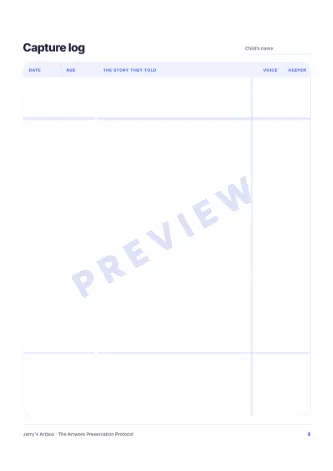
The Artwork Preservation Protocol lays out this routine with fast facts, a printable capture log for stories as they happen, a Keepers of the year page and the whole routine on one page.